
Personalized Center-Based ABA Therapy in Port St. Lucie, FL
Our ABA center provides a structured and supportive environment where children with autism can work on communication, social interaction, behavior, school readiness, and daily living skills through individualized treatment supervised by experienced BCBAs.
Bilingual intake support is available in English and Spanish. Insurance coverage and service availability depend on the child’s clinical needs, documentation, insurance plan, and authorization.
What Is Center-Based ABA Therapy?
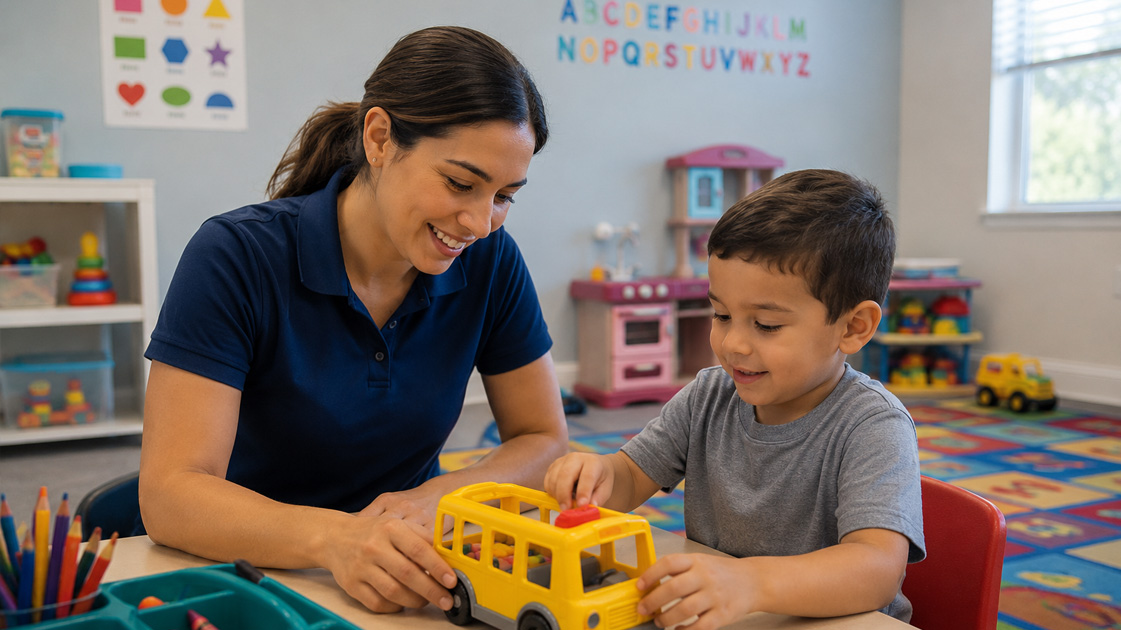
Center-based Applied Behavior Analysis is delivered in a structured clinical environment specifically arranged to support learning, communication, behavior development, social practice, and everyday independence.
Unlike a typical classroom, the ABA center allows the clinical team to individualize activities, control distractions, collect treatment data, and help children practice skills across one-on-one, small-group, play, and daily-routine activities.
A Structured Environment Designed Around Your Child’s Needs
Each child’s program begins with a clinical assessment and an individualized treatment plan developed and supervised by a Board Certified Behavior Analyst. Goals are selected according to the child’s current abilities, developmental needs, family priorities, medical necessity, and insurance authorization.
Sessions may include individualized teaching, natural play, communication practice, peer interaction, transitions, self-care routines, and parent collaboration. The exact treatment model and schedule vary for every child.
Our goal is not to provide the same program to every family. It is to create a clinically appropriate plan that supports meaningful, measurable progress in skills that matter in everyday life.
How a Center-Based ABA Program Can Support Development
A clinical center offers access to structured learning spaces, specialized materials, trained professionals, and supervised social opportunities that may be difficult to reproduce consistently in other environments.
Focused Learning
Structured routines and individualized teaching strategies help children practice attention, participation, communication, and learning skills in a supportive environment.
Social Skill Development
Children may practice turn-taking, functional communication, cooperative play, group participation, and peer interaction through supervised activities.
Daily Living Skills
Individualized programs may address self-care, transitions, school readiness, safety, routines, and greater independence in everyday activities.
Positive Behavior Support
Evidence-based teaching and reinforcement strategies help support meaningful progress toward each child’s individualized behavioral and developmental goals.